John Williams was a military veteran. That wasn’t the most interesting thing about him, though, because John Williams was also homeless. I met him on a cold January night many years ago when I picked him up from downtown Nashville. He was short in stature and had a head full of silver hair. He had only two other things with him that night, as I remember: a trash bag containing everything he owned and a nasty cough. It was the kind of cough that makes people wonder if something is medically wrong. Still, I drove away unconcerned with Mr. Williams in my back seat. My Sunday School class sponsored Room in the Inn twice each winter. John certainly wasn’t the only homeless man we had encountered with a wicked cough. He would, however, become the most memorable.
Room in the Inn is a ministry partnership between the organization that bears its name and local churches scattered throughout the Greater Nashville area. The ministry itself indirectly provides a multitude of resources for Nashville’s homeless population, including food, shelter, and job training. The only thing directly provided by Room in the Inn is Christ’s love—the only provision actually needed. John Williams was one of eight homeless men assigned to Long Hollow Baptist that Friday night—one of eight men entrusted to the overnight care of the Jon Duncan/Wayne Smith Small Group. If Room in the Inn leadership had recognized the dysfunction that was the “Jon Wayne Gang” they likely would have offered services to us on the spot. We affectionately referred to the class as the Land of Misfit Toys. Class members were in their 30s, 40s, or 50s and had children of all ages. The only thing some of us had in common was Jesus. But that common denominator meant that we enjoyed being together, and we enjoyed spending a Friday night serving those the world had forgotten.
I don’t remember very many details of that night prior to 12:30 a.m. I’m sure we had a delicious dinner with our guests, like always. Salad, pasta, and vegetable casseroles were the usual, and the men always loved the food. Sometimes we served dinner to the homeless on china with actual silverware. One or more of our guests would usually remark that it was way better than the pizza they had eaten the night before at a church whose name they had forgotten in a suburb they couldn’t remember. Coffee was a necessity. We typically had no scripture reading, no praise songs, and no formal invitation. The only prayer was usually a blessing over the food. In fact, the only thing we directly provided was Christ’s love—the only provision actually needed. One or two of the fellows were usually big talkers, but the remainder were either quite introverted or embarrassed by their need, content to go to bed immediately after eating. As I recall, John Williams finished dinner and went directly to the mattress he had claimed immediately upon his arrival. He was asleep on the vestibule floor by 9:00, not to be heard from again for three-and-a-half hours.
Wayne and I were settling into our makeshift beds in the church lobby, light green leather benches that looked far more comfortable than they actually were. We didn’t complain. Nothing like first-world suffering for Jesus, right? The lights were out, the crowd long gone since dinner cleanup had concluded. Several class members would return the following morning for breakfast duties and to tidy up after our guests. We had already played “the last word”—a ridiculous game in which Wayne and I deliberately tried to out-weird each other by saying the most random word before falling asleep. The last word was probably biscuit, nectar, or something similarly stupid, funny only to weirdos like us.
Although I don’t remember the last word of the night, I will never forget the next word we heard—INNKEEPER!! The voice sounded like someone who wanted to shout but didn’t have the lung capacity to do so. INNKEEPER!! We weren’t dreaming. One of our homeless guests, John Williams, attempted to call for help a few more times while Wayne and I just looked at each other, trying to determine who fit the description of innkeeper. Nothing like this had ever happened when we hosted the homeless before. It was supposed to be a tidy little package deal—pick up homeless men, feed them dinner, provide a shower and a bed, feed them breakfast, and drop them off in Nashville the next morning. In fact, I remember sharing with our class after we hosted a previous time that it all “just seems too easy.” Normally, the morning drivers just dropped off the men back at the ministry on Drexel Street and returned immediately to our comfortable, suburban lives in time for ball games, naps, or family time. My point was that being the hands and feet of Christ didn’t just happen in scheduled, twelve-hour increments, like hosting the homeless. “It just seems too easy” turned out to be prophetic words. The Lord has a sense of humor.
INNKEEPER!! We both incoherently concluded that Mr. Williams needed our help, so we staggered to our feet, still unsure of who wore that official title. When we got to Mr. Williams, he was struggling to breathe and told us that he was having chest pains. This dude needed a doctor, not an innkeeper, and certainly not two public school teachers. We called 9-1-1. The paramedics arrived quickly, did some preliminary diagnosis work, and wheeled John Williams out on a stretcher to the waiting ambulance. I followed in my car, leaving Wayne-the-Innkeeper in charge of the remaining seven men. Selfishly, it seemed like the easier job. The paramedics were taking care of Mr. Williams, and Wayne was taking care of the other guys. I had very little responsibility. I’m pretty good at very little responsibility.
At the ER, I watched just outside an observation room as a SWAT team of physicians and nurses swarmed the old man hooking up machines and asking questions. This was bad. The pace of the work became more frantic, and the door to the room was suddenly closed. This was worse. Unsure of what to do next, I found the waiting room and sat there for what seemed like an eternity. What was my next move? Who did I need to call? At some point, a doctor emerged and asked, “Is the family of John Williams here?” I was the only person in the waiting room. Bracing myself for the unthinkable, I muttered something like, “I’m just the innkeeper.” I managed to explain that John was a homeless man whom I had met only seven hours earlier. I told the doctor that he was part of a larger group my church was hosting overnight. The doctor said that Mr. Williams had suffered a serious heart attack but was now stable and would hopefully recover. “Now what?” I mumbled. The doctor said John had to be admitted to the hospital, but that wasn’t really what I meant. I’m not sure why, but I asked if I could see the old man, and the doctor led me to the room.
Mr. Williams was partially reclining in the bed and wearing no shirt. He had wires connected to his chest and an oxygen tube inserted into his nose. He was sweating profusely, his silver hair drenched, and still struggling to breathe. I guess this is what “stable” looks like, I thought. As I asked questions he was either unable or unwilling to answer, I wiped his brow with some tissues I found in the room, admittedly angry that a loved one was not available to do so. God had never asked me to be so personally involved in the life of a stranger…until the night He did. There literally was nobody else to help this man. As I headed back to the church later that morning, it occurred to me that innkeeper sounded much better than caretaker. Caretaker had a permanent ring to it.
Room in the Inn had no record of relatives for John Williams, so the Jon Wayne Gang became his de facto family during his hospital stay. Several class members visited him a few times during his recovery. We learned that he had served in the military and bounced around from city to city after his enlistment was over. He had worked mostly in food services but had never managed to scrape out much more than a minimal existence. There was no wife, no kids. I asked him if he knew Jesus, and he assured me that he had at some point in the past. “I have backslid,” he told me ashamedly. I assured him that I didn’t know any believers who had not backslid at some point in their walk. He seemed relieved to hear that and assured me that he had, in fact, professed faith in Christ at some point in his past. Mortality has a way of making men open to these kinds of conversations. I gave him a Bible only to learn that he was borderline illiterate. When he asked me to read it to him, I asked him what he wanted to hear about. He couldn’t decide, so I gave him the first three choices that popped into my head: Christ’s birth, His death and resurrection, or the early church. “I want to hear about the early church,” he said. “I already know about that other stuff.” I chuckled and began reading from the book of Acts, while he listened intently.
Over the next few days, John’s health improved. I brought him a portable CD player along with CDs of our pastor’s sermon series, Written in Red. He needed a brief tutorial on how to operate the CD player. Finally something I felt adequate to do. It never really occurred to me that the old man, now a heart patient, would soon be released and would resume his life on the streets of Nashville or some other city. Needless to say, I was completely unprepared when the hospital called with discharge orders. I was even less prepared for the list of medications that Mr. Williams now needed.
I remember it was absolutely frigid the day I picked John up from the hospital. My car heater was cranking full blast, as I drove this homeless veteran and his unfilled prescriptions to what felt like his funeral. “How can I just drop this guy off like nothing has happened?” I wondered. In a state of concealed panic, I called a relatively new class member, Kevin Eidson, who had helped us serve John and the other homeless men a couple of weeks earlier. Didn’t I remember Kevin mentioning that he was a pharmacist or something similar? My phone call interrupted Kevin’s lunch with his wife, but he graciously agreed to meet me immediately, and I drove directly to the restaurant. I showed him the stack of prescriptions, and they were miraculously filled free of charge within an hour. This pharmacist who had only recently started attending our small group turned out to be the Executive Director of the Tennessee Board of Pharmacy. God is so awesome.
Our class collected enough money to rent a room for Mr. Williams at the Hendersonville InTown Suites, where he stayed for several weeks and ate food lovingly supplied by class members. Several of us visited him regularly, but never for very long. He seemed to enjoy having control of his very own heater and kept the room like a sauna while he lounged in shorts and a t-shirt in early February. During Mr. Williams’ recovery, Jeff Morris–our church’s Room in the Inn coordinator–worked tirelessly to piece together a work history. John was entitled to military retirement, along with Social Security benefits. Apparently Mr. Williams had never stayed in one place long enough for anyone to help him. In fairness, maybe he didn’t want to be helped. Heart attacks aren’t always bad things, I guess. What the enemy intends for harm, the Lord intends for good. God showed off again with Social Security payments that began in record time, not to mention retroactive benefits that had accrued for several years and were paid in lump sum. Jeff had also managed to find a permanent home for Mr. Williams at Christian Towers, a retirement community in Gallatin, Tennessee. We could all envision John walking down to the town square daily for coffee with new friends and food that he could now afford on his own. He seemed excited, too.
On the day Jeff Morris arrived to take Mr. Williams to his new home, the happy story abruptly ended. Instead of finding John packed and ready to go, Jeff found him collapsed on the shower floor of his rented room. A brain aneurism killed John Williams before he could even begin his new life. The day he was supposed to move into his new home in Gallatin turned out to be the day he moved into his permanent home with Jesus. I don’t think he minded.
On this Memorial Day, I remember a veteran who was forgotten by the very country he served. John Williams defended his country honorably and then proceeded to live for decades with the dishonor of homelessness. I find comfort in the fact that for a few short weeks at the end of his life, John experienced the love of Christ exhibited by a group of unsuspecting Christians who thought we were just feeding eight homeless dudes some pasta and giving them a place to sleep on a cold winter night. The dishonored Mr. John Williams was ironically buried with full military honors and laid to rest at the Middle Tennessee State Veteran’s Cemetery in Pegram, Tennessee. No relatives could be found to attend the funeral. Mr. Williams is survived by two clueless innkeepers and a small group of believers who smothered him with Christ’s love, if only for a few weeks. We are all looking forward to seeing him again someday.

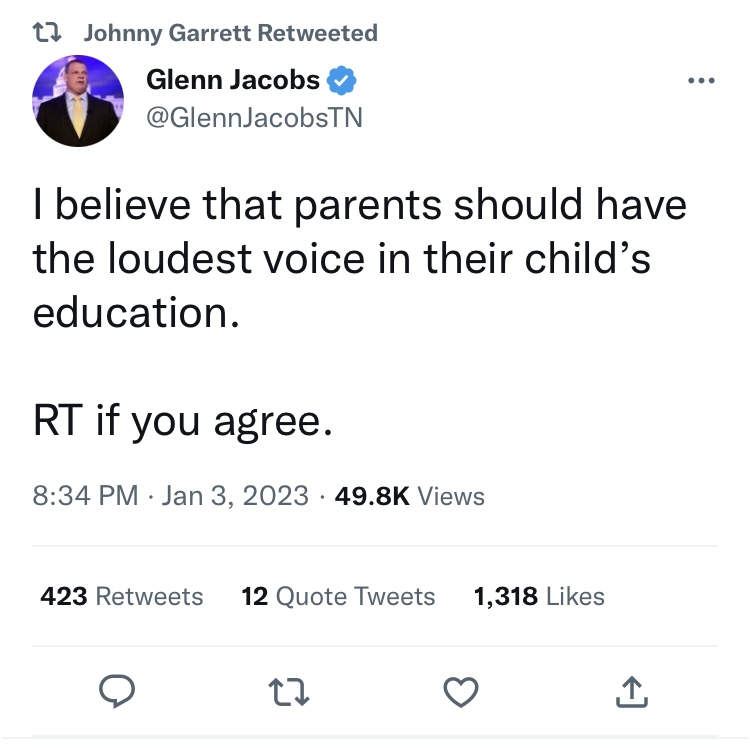

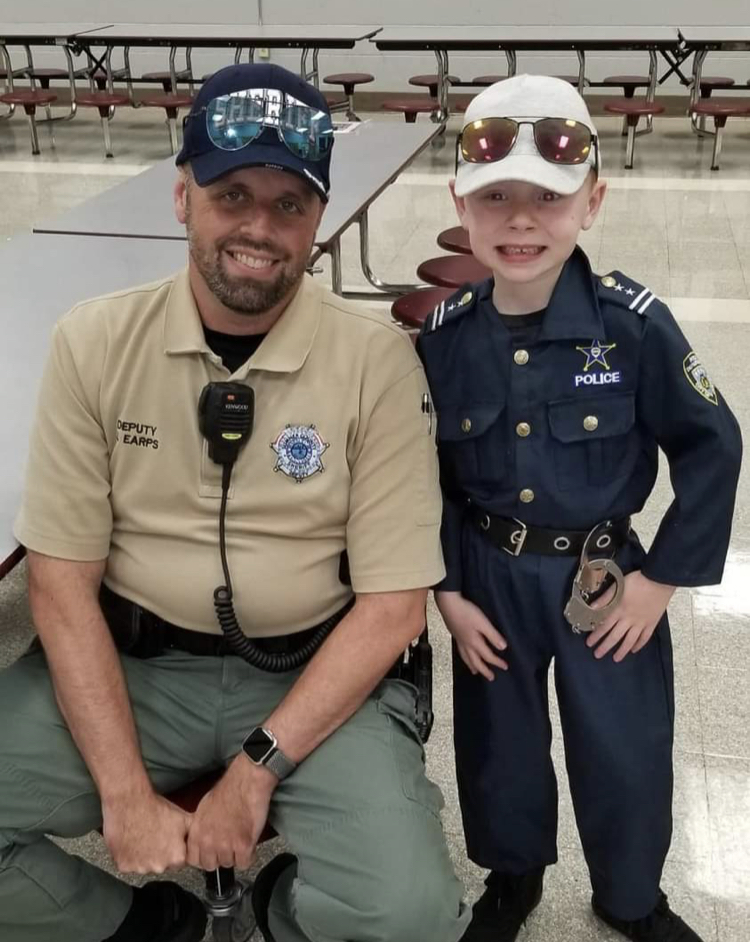


 Let’s get back to school. Let’s get back to friendships, potato smiles, and learning. It’s time for students to enjoy some normalcy in a fun and familiar place. For many children, life away from school is neither normal, nor fun, and it would be a mistake for us to presume otherwise. Classrooms were built for learning and laughter; taxes were paid to educate kids in the most optimal way. It’s time for the majority of us to answer the school bell in person, at least those who can safely do so.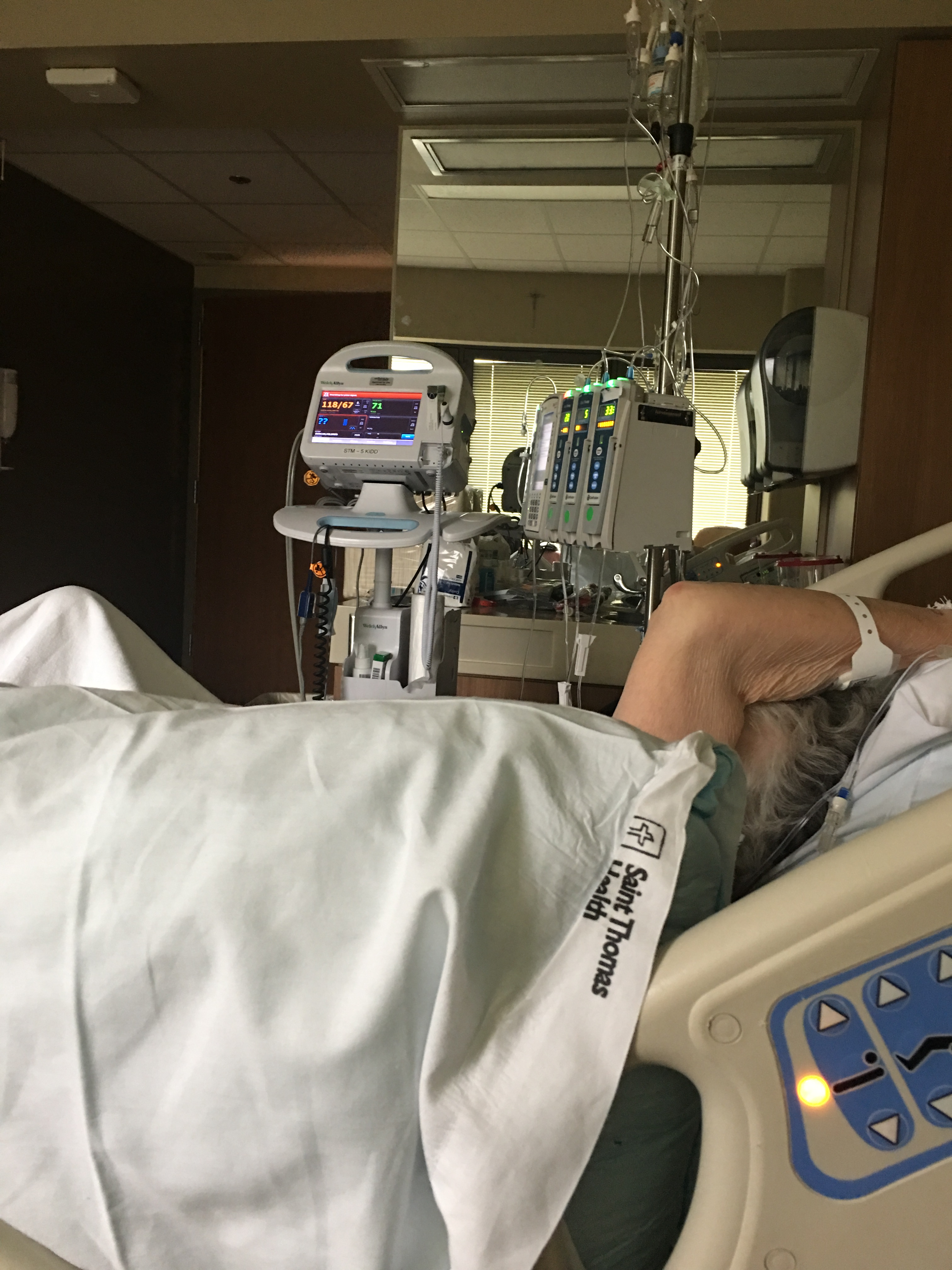
 Last night something strange happened. I watched a regular season hockey game on TV in its entirety. To make sure I experienced the totality of the event, I watched the pre-game, the post-game, and the intermission reports. Stranger still, this was a Thursday night when I could have been—normally would have been—watching the Philadelphia Eagles at the Carolina Panthers. That’s right, I chose to watch grown men on ice skates (okay, the Stars vs. the Predators) instead of an NFL game between two teams that were leading their respective divisions. I chose the NHL over the NFL last night, and it was absolutely magnificent. Surely this is a sign of the Apocalypse.
 Heck, I even went to hockey games. In the early to mid 90s, my wife and I would cheer on Nashville’s minor league hockey team, the Knights, in person at the UFMA (Unidentified Flying Municipal Auditorium). Fresh out of college and newly married with no kids, these were double date nights with dear friends—friends who also went to church with a UFMA usher. Don’t judge me. Sure we got in free, but I paid for every single bag of deep-fried mini-donuts I bought from the concession guy, and I ate thousands of those things. Think round, bite-sized funnel cakes. Whatever I didn’t eat, I generally wore home. Clearly, I was a hockey concession supporter at the very least.
 Worse for the Predators, Adelphia Coliseum, a 69,000 seat football stadium, was being built just across the Cumberland River from the GEC. Thanks to a Music City Miracle and a Super Bowl run in 2000, Tennessee’s new NFL team, the Titans, had captivated the collective interest of what was already a dyed-in-the-wool football town. Nashville was absolutely rabid over the Titans. So rabid in fact, the city threw a Super Bowl LOSER parade…and more than 20,000 people attended…in 33 degree weather. A teacher at the time, I had students skip school to attend the parade. I excused their absences.
 Music City is now a hockey town, and a mediocre Titans team (whose last playoff win came in 2003 with Steve McNair at QB) should consider itself fortunate and humbly pick up the second fiddle. The funny thing about the ice-skating Europeans, Russians, and Canadians is that they all stand for our National Anthem, likely recognizing the uniqueness of their American opportunity and possibly even remembering real oppression in some of their home countries.
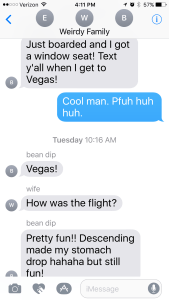 though she boarded as part of the “B” group. Her excitement reminded me of my first flight many, many years ago and my surprise to find that Earth looks much different from above. I remember being shocked at the efficiency with which mankind had managed to subdivide God’s creation. Geometry took on a new meaning for me that day, as I peered out the small window to see squares, rectangles, and circles in various shades of green. In fact, the blues of the water seemed to be the only creation unmodified by property owners and surveyors. But even some of the blues were manmade shapes. God supplied the water, true, but humans still managed to figure out how to shape the reservoirs in many cases. Isn’t it interesting how the created insist upon helping the Creator?
 reluctantleadersite