SHOCKS OF FAITH

My brother-in-law has driven Cadillacs for as long as I can remember. No words I could put together would describe the Cadillac experience for those who have never ridden in one. As a teenager, bumps and potholes that shook my insides while driving my 1982 S-10 would seemingly disappear in his Sedan DeVille. Sometimes when I rode in that Cadillac with him, I found myself wondering if familiarly rough roads had been repaved. There was that much difference.

Not much has changed over the years, at least regarding transportation. My brother-in-law still drives Cadillacs, and I still drive a small pickup truck, a 1993 Toyota, with 155,050 miles on it. At least that’s what the odometer read when it stopped working at some point many years ago. The rides are equally as different as they were in the late 1980s. What has changed over the years, however, is my faith. The Cadillac/pickup truck analogy is the best one I can use to describe the difference in the faith of my teenage years and that of my middle-aged years.

As youth became young adulthood, I continued to believe that God smoothed the path of the Christian. Through Divine Intervention, I believed blessings were essentially a resurfacing job on the Road of Life. Saying my prayers and reading my Bible, I believed, were reasons enough for Him to keep my pathways free of bumps and obstacles. My reasoning established a perception that Christians traveled a much smoother Road of Life. Imagine how shocked I was to learn otherwise. Personal experiences and those of much more mature Christians around me forced me to rethink my faith. Reading my Bible and praying were not enough; my road was pretty bumpy at times, and I watched as men and women of deep faith received diagnoses, buried loved ones, and lost businesses. My solution? Praying specifically for God to remove problems had to be the only answer. And so I did—for my family and for my brothers and sisters in Christ.

Over the years, those kinds of prayers seemingly went unanswered more often than not. “Removal prayers” sometimes still do. I continue to pray for smooth sailing and no obstacles. “Lord, go before me and…” is the habitual line. “Order my steps, Lord, and protect me from…” is another favorite. But why would God remove the very challenges he uses to mold me? Why would He direct me around a crisis that deepens my faith? Why would he take away friends’ problems that detour them closer to Him? Did he ever remove the thorn from Paul’s side?

Reality is evidence that believers and non-believers travel the same roads, literally and figuratively. Crises and challenges are not reserved for pagans. The only difference is in our spiritual suspension. Isaiah tells us that the Upright One makes the way of the righteous smooth (Chapter 26, Verse 7), but “way” should not be mistaken for the road or the path. The smooth ride of the Cadillac was never a result of road condition. The secret was in the shocks. Lord, equip me with shocks of faith and struts of trust. Road hazards are everywhere.


WHEN DISRESPECT AFFIRMS LIBERTY

Much has recently been made of NFL players protesting social injustice during the National Anthem. Every talking head on TV seems to have an opinion, and I love listening to and considering their positions. But few things kill credibility quicker than name calling or hatred. If insults are necessary to add validity to our message, we don’t have much of a message, I’m afraid. The most compelling argument becomes impossible to see when shrouded in an impenetrable fog of contempt. What a shame. Colin Kaepernick sat, and the world hurled insults. Even my two Twitter followers were subjected to an angry, knee-jerk reaction to Kaepernick’s disrespect. Hopefully, we have all calmed down a bit, including me.

On a much, much smaller scale (but on a much more personal level), I encountered a similar situation in a high school classroom several years ago. Like every public school in Tennessee, we started each day with the Pledge of Allegiance and a moment of silence. Year after year, everybody respected both practices (or at least faked respect because they didn’t have the courage to do otherwise). Until one day when not everybody did.

It was the beginning of a new semester, and I had never met the young man in my class–my personal Colin Kaepernick–who chose to remain seated that cold January morning when the voice over the intercom echoed through the hallways: “Please stand for the Pledge.” Like little soldiers, every other student in Room V5 stood, placed a hand over the heart, and began that day like any other day of their school existence–“I pledge allegiance to the flag….” A few students noticed “Colin” sitting during the pledge. The look on their faces led me to believe that they were prepared to offer the benefit of the doubt. Maybe the kid had a rough morning. Perhaps he was tired. Maybe something else was wrong. High school kids are much better people than society would have us believe.

Most of my juniors and seniors seemed to respect whatever message Colin was trying to send, if only for the first two or three days he remained seated. Sensing a learning opportunity, I decided to play the role of spectator and nothing more. About the fourth day Colin remained seated, another young man got an idea and decided to assert his First Amendment rights. The Pledge started as usual that day, “I pledge allegiance to the flag of the United States of America…” Then things got interesting. “…and to the Republic for which it STANDS!!!” I don’t recall making it to the “one nation under God” part that day, but I do remember how quiet the room became when everyone realized what had happened. Somebody had found the courage to address what he considered to be disrespect of our flag. From this teenage patriot’s perspective, shouting “STANDS!!” seemed like a reasonable way to express his opinion about Colin’s refusal to, well, STAND.

Like any good teacher, my reaction hinged on what happened next. Absolutely nothing happened next. Neither angry words nor mean looks were exchanged, so I got busy doing what I did, teaching Accounting. At least we could all agree on the importance of debits and credits, right? Crisis averted. I must admit, however, I was secretly looking forward to what would happen the next day. Would Colin remain seated? Would The Patriot again yell STAND!!?

My entire class expressed their thoughts the next morning by yelling STANDS!, and Colin remained seated, more defiant than ever. I decided to give students one more day to resolve the conflict without my involvement. As I saw it, both sides were civil (at least by teenage standards) in their approach to the disagreement, so why not give everybody the opportunity to express themselves? To Colin’s credit, he remained resolute. To this day, I admire that about him. I completely disagreed with what I still consider to be his lack of respect for our nation and those who have fought to protect it, but the idealistic part of me LOVED the freedom he had to sit. So, that’s how I approached the matter when I finally stepped into the conflict. The initial benefit-of-the-doubt looks had turned into looks of, “Mr. Duncan, why don’t you make this disrespectful kid stand?” Kids don’t understand that forced allegiance is no allegiance at all.

After declining my offer to explain the rationale behind his protest, Colin’s popularity rating hit an all time low. He was quickly becoming a rebel without a cause among his classmates, and he was rebelling against a practice most of them believed to be sacred. Some of them were approaching livid. I felt compelled to bail this kid out, so I said what was on my heart. “Colin,” I began, “The irony in your actions is that by sitting during the Pledge, you are actually affirming everything that flag represents.” He gave me a confused look.  I rephrased, “The flag you are protesting represents the very nation that gives you your right to protest.” Click. He got it. I could see it on his face. The class collectively exhaled, relieved that I had at least addressed the behavior.

Colin willingly stood for the pledge in my class the next day and every day after that. Isn’t it interesting that a chorus of loud and angry disagreement did nothing to change Colin’s mind about our flag and our country? The louder his classmates yelled, the more anchored to that chair he became. In their defense, my students honestly believed that a corporate rebuke was the only solution to the disrespect they had observed. They attempted to right what they were convinced was wrong. I applaud them for their efforts. I also applaud Colin for having the courage to buck conventional wisdom. I don’t agree with the method he chose to protest whatever he was unable to verbalize that day. But I absolutely respect his right to do so. At least in theory, our freedoms of speech and expression are not dependent upon the popularity of our message. Asserting my First Amendment rights requires me to defend Colin’s.

Should the real Colin Kaepernick continue to sit, anger won’t make him stand. Even if it would, forced allegiance is no allegiance at all. The actions of Kaepernick and others like him affirm the very freedom my flag affords them. Thanks to this season of home-grown disrespect toward America, the world is now regularly reminded how truly unique our awesome country remains, with or without the gratitude of its own citizens. Here is what I find so cool–It is absolutely impossible for a U.S. citizen to disrespect the American flag without unwittingly affirming the greatness of America. I believe these recent protests by athletes are disrespectful and misguided, but I will defend the protestors’ rights to express themselves. The only thing that remains to be seen is whether or not my support is reciprocated when I hold an unpopular view…and choose to express it publicly.

HURRICANE JESUS

What if a downpour could wash away our hatred?

What if some rain would scrub away our rage?

But showers won’t clean these streets that lay red,

While this monsoon of contempt confines us to this cage.


We drown in animosity, a thick and ugly sludge.

Could we choose to replace that with Love?

Could we be quick to listen and much slower to judge?

Could we let God heal the bitterness from above?


What if winds of change blew in the right direction,

Instead of watches and warnings all around?

Father, we desperately need your protection.

Holy Spirit, reclaim this stormy ground.


Flood us, Lord, with compassion for our brother;

May grace and mercy puddle on our land.

Give us patience and empathy for one another.

Provide us the courage to take a stand.


It’s the Summer of 2016,

Nothing and nobody can seem to please us.

Race relations, like weather, turn mean;

Come quickly, Hurricane Jesus.

A HORSE NAMED BRILLIANCE

Once upon a time, a boy named Billy was gifted a horse named Brilliance on the day he was born. His family sacrificed greatly to give him the gift because they believed that someday Brilliance would take him somewhere beautiful, a place perhaps they were never able to go themselves. As Billy grew, so did Brilliance, and before long, the boy was big enough to tend to the horse by himself. Brilliance was fed, watered, and exercised. The horse received the best training imaginable, provided by Billy himself, who devoured books on the subject and eagerly and effectively applied the strategies he learned. Brilliance quickly became the best-nurtured and healthiest horse around. Billy rode her to school every day, always eager to learn, and Brilliance never failed Billy through elementary, middle, and high school.

When Billy began searching for his independence, as boys tend to do, he regularly saddled Brilliance and took her for runs beyond the fence, beyond the farm, and even beyond the town where he was raised, a place called Common Sense. These adventures were exhilarating, as the boy quickly learned the true power of Brilliance. Over the years and always together, they visited an outpost called Judgment, a township named Discernment, and a city named Wisdom. Billy marveled that these trips only made Brilliance stronger and more impressive than ever. The boy was keenly aware that the thrill of these rides was partially attributable to the fact that his parents were unaware of his adventures. Like most parents, though, Billy’s mom and dad were well aware of his experiences and had even visited some of the same places themselves. In the end, though, they always returned to Common Sense, a place populated by people who had experienced Judgment, Discernment, and Wisdom on horses far less impressive than Brilliance.

After high school, Billy informed his family that he would be riding Brilliance to a place none of them had visited before. It was a place he had only read about in books, a metropolis known simply as Enlightenment. With their blessings, he made preparations for his trip and set out before sunrise one morning. Brilliance trotted past Judgment, cantered past Discernment, and was at full gallop by the time he flew through Wisdom. As the skyline of Enlightenment became visible on the horizon, Billy changed his mind and decided to see just how far Brilliance would take him. The original destination, Enlightenment, passed by in a fantastic blur, as the horse remarkably managed to pick up even more speed.

Billy held on for his life as Brilliance took him farther than he ever wanted to go. The horse ran until she could no longer run and collapsed at the base of a giant sign that read, “Welcome to Lunacy.” With no horse and no way home, Billy became a resident of Lunacy. He built an ignorantly blissful life for himself there, interacting with other Lunatics and even marrying a local girl. Together with his neighbors, Billy made enlightened, yet illogical, decisions and formulated asinine opinions, which regularly baffled his parents and his friends back home in Common Sense, not to mention the permanent residents of Judgment, Discernment, and Wisdom. For poor Billy, Common Sense was long gone, and he had nothing but his own Brilliance to blame.

The moral of the story is quite simple. If you find you have been blessed with Brilliance, count yourself fortunate, but don’t ride her too far. Lunacy is only a stone’s throw beyond Enlightenment, and there are talks of annexation. Common Sense, Judgment, Discernment, and Wisdom are all better places to settle, in spite of what the Lunatics the Enlightened would have you believe.

Congratulations on your high-school graduation, Eli.  Mom and I are beyond proud of you, and we can’t wait to see what God has planned for you next.  “Get wisdom. Though it cost all you have, get understanding.”  -Proverbs 4:7

I love you…Dad.

STANDARDIZED TESTING IS LIKE ________.

Pick your favorite comparison. Standardized testing (think TCAP or TNReady) is like a music recital, a dance competition, or even the opening night of a play. We could metaphorically compare standardized tests to Boy Scout badges, NASCAR races, or perhaps even balance sheets. All of the things mentioned represent a summative attempt to measure and/or reward the work of those involved in the activities. Still, the true value of each measure lies in the preparation that precedes it. I prefer an altogether different analogy. The most logical parallel for me personally is the one easily drawn between state assessments and sports. Standardized testing is like a ball game and the results are like a scoreboard.

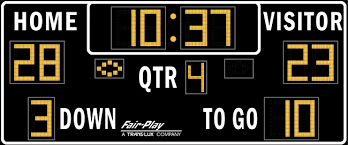
Scoreboard

“Wait a minute, wait a minute,” some might say. “People VOLUNTARILY participate in Boy Scouts and ball games, so badges and scoreboards reflect the performance of willing participants, exclusively. That’s not the case with schools and tests…EVERYBODY participates in those.” I get it. Valid point. In order for that difference to nullify the analogy, however, we would have to be willing to conclude that dance, Boy Scouts, and NASCAR are equally as important as school and the tests that go along with school. I’m not prepared to admit that, and I don’t think I know anybody who would. Everyone participates in education because it’s more important than Scouting and sports.  Right?

If you played ball growing up, or even if you are simply a casual fan, you understand the purpose of a scoreboard—it measures performance. Sometimes the scoreboard can even reveal a bit more than the end result. When our Titans fall to the Falcons 10-7, for example, the scoreboard tells us we lost, but it also tells us that offense is a greater concern than defense. We might consequently expect the coaches to address that specific problem over the course of upcoming practices and film sessions. If you watch your favorite team’s scoreboard over several weeks, or over the course of an entire season, you can begin to recognize patterns of progression or possibly even regression, like we saw with the 2015 Titans. Mandated assessments like TNReady are remarkably very similar to athletic contests. For students, state tests reveal proficiencies and deficiencies, achievement and growth. For teachers and schools, tests reveal what can sometimes feel like wins and losses. For everyone involved, tests reveal opportunities for improvement.

Standardized tests (games) and their results (scoreboards) tell a teacher (coach) how students (players) performed. Future instruction (practice) is planned accordingly by teachers, with a laser focus on team AND individual deficiencies. Great educators, like great coaches, care much more about their pupils than they do about games or scoreboards. That said, scoreboards and standardized tests are undeniably a very important part of team improvement and individual growth.

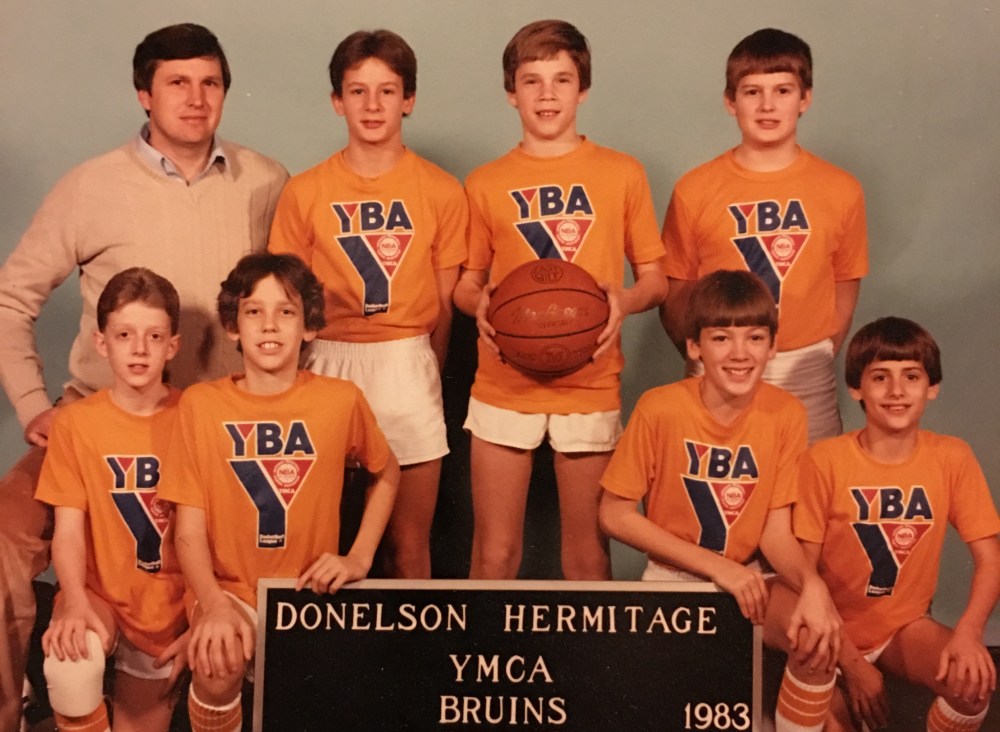
YMCA Bruins

I played a lot of ball when I was (much) younger. I honestly can’t remember a single final score from any of my games. What I still remember vividly, however, are character lessons learned in practice—things like accountability, hard work, self-awareness, teamwork, and resilience. Interestingly, not one of those things was ever singularly identifiable on a scoreboard. What the scoreboard revealed to my coaches and me was how those skills and attributes manifested themselves collectively over the course of an isolated game. The scoreboard tells a very important part of the story, in other words. Test results tell an important story, as well.

As the principal of your child’s school, I care very deeply about the scoreboard, but not nearly as much as I care about the students who play the game. I care about the scoreboard because it measures our collective performance as a school community and helps us address academic deficiencies in our individual students. The lessons the kiddos learn along the way aren’t singularly identifiable on any given assessment; they are, however, revealed as the sum total of our students’ intellect, determination, and reasoning throughout their lives.

I hope our students grow into adults who don’t remember their TNReady scores. But I sincerely hope these same students see a relationship between hard work and performance, a correlation clearly revealed through standardized tests like TNReady. I hope our students remember we loved and supported them unconditionally, regardless of test performance. We want to celebrate students’ academic “wins” and help them grow through what might feel like intellectual “losses.” Keep in mind, we sacrifice the opportunity to accomplish either if we don’t play the TNReady game, or at least some sort of similar game.

You have my word, students will remain our focus for as long as I am blessed to lead our school. Standardized assessments, like scoreboards, have their place and simply measure how well we (educators, parents, and students) execute our student-centered game plan.  As for the number of “games” in our school year and the age at which we begin “keeping score,” well, those are different concerns for a different blog. As for potential “pre-game jitters,” I am confident that kids will continue to be successful in our very deliberate attempts to help students address and minimize test anxiety—another life skill that only formal tests enable us to teach.

Concluding the analogy with a pep talk now, third, fourth, and fifth students have a five-game home stand scheduled for the next couple of weeks. They have practiced incredibly hard. Our opponents are ELA, Math, Science, and Social Studies. Please help our team by making sure players arrive to the games well-rested and well-fed. You might even consider reminding them of something they hear regularly at our school—their best is always good enough. I am optimistic and excited to see what the scoreboard reveals this year, and I know you are already as PROUD of our coaches and players as I am. Scoreboards aren’t necessary to validate that pride or to determine how much praise we shower on the team, but they undoubtedly help us identify coaching concerns before the next game…and they absolutely help us to prepare players for the next season. Thank you, parents, for cheering on our team.

GO STUDENTS!

HASLAM’S HINDENBURG

Sumner County was most definitely TNReady. the Director, the School Board, and the County Commission made sure of that, appropriating and approving $500K annually for school technology upgrades. Schools were absolutely TNReady. PTOs and parents made sure of that, raising hundreds of thousands of dollars through fundraising efforts over the last four years. Since 2012, schools have drastically improved technology, adding countless iPads, increasing the number of computers from in every school, and building completely wireless campuses. Clearly, both the county and schools were nicely positioned for the beginning of online standardized testing, known simply as TNReady.

The Tennessee Department of Education (TDOE) may or may not have been TNReady, but its testing vendor, North Carolina-based Measurement Incorporated (MI), was definitely TNOTReady. Most stakeholders are aware that on Monday, February 8, our state ushered in the much anticipated era of online testing for elementary schools. At approximately 8:25 a.m. on that cold, inaugural February morning, the MI online testing platform, MIST, crashed and burned before the eyes of students all across the state. Interestingly, students and teachers were not surprised by the disaster. Quite the contrary. The same website had been crashing on them for weeks and months leading up to the official test, as they practiced using the MIST interface. Truthfully, the only thing that might have surprised the elementary world on February 8 would have been if MIST had actually survived under the technological stress of statewide testing. MIST missed the mark.

The official diagnosis of the testing disaster, according to the Commissioner of Education, Dr. Candice McQueen, was a “severe network outage” experienced by the state’s vendor, Measurement Incorporated. In an email to Tennessee school districts, McQueen expressed a loss of confidence in MI, resulting from the “new nature” of the problems experienced on February 8. To the credit of TDOE in general, and to Dr. McQueen’s credit in particular, exhaustive efforts were made to prevent the meltdown. Countless field tests, improvements to server capacity, and continual collaboration with local school districts were only a few of the efforts made in the weeks, months, and years leading up to online testing. Nonetheless, I don’t know a single educational professional who thought we would be able to pull off in 2016 what Phil Bredesen (D) and his successor, Bill Haslam (R), insisted we try.

Make no mistake, TNReady is a bi-partisan train wreck and provides further evidence supporting the need for educational decision making at the local level. Perhaps a train wreck is the wrong comparison, however. A better analogy might be a plane crash, considering the “we are building the plane as we fly it” talking points made famous by former TDOE Commissioner, Kevin Huffman, and former Assistant Commissioner, Emily Barton Freitag.  Similarly ridiculous happy talk was embedded in virtually every training offered by TDOE after Tennessee won (or lost, in hindsight) the $501 million USDE Race to the Top sweepstakes. “We are building the plane as we fly it” echoed across the state for six years, during TNCore and TEAM trainings, in conference rooms and committee meetings. Kool-Aid was also served at most of these gatherings. Front-line educators wisely chose water. Has history ever recorded a more compelling argument in support of educational decision making at the local level?

Planes built during flight don’t land well. In fact, I can think of only one analogy more asinine than “building a plane as we fly it,” but it is regrettably and unfortunately an analogy that has sadly materialized. On February 8, 2016, Captain Haslam, not Commander McQueen, piloted a plane named TNReady to its destruction, stubbornly insisting on “building the plane as we LAND it.” Having parachuted out earlier, Bredesen, Huffman, and Freitag were M.I.A. Airship TNReady crashed and burned with the media watching, and the debacle has become, in my opinion, Governor Haslam’s very own Hindenburg Disaster, no matter how far he attempts to distance himself from the wreckage. Setting aside the differences in time (1937 vs. 2016) and context (aviation vs. education), similarities abound between the Hindenburg Disaster and the TNReady Debacle. Admittedly trivial but remarkably intriguing, comparisons between the two failures are outlined in bullet points below.

article-2287608-186AEA9F000005DC-218_638x479

  • Both “breakthroughs” were successfully tested. The Hindenburg safely completed more than 50 flights, beginning in 1936; TNReady survived thousands of testing sessions during high school End-of-Course tests in the fall of 2015.
  • Both advancements were billed as improvements to existing offerings. The Hindenburg was considered to be a quicker, more luxurious alternative to transatlantic travel; TNReady was considered to be a better, more efficient alternative to paper-and-pencil standardized assessments.
  • Both disasters began as contractual business endeavors. American Airlines contracted with German company, Deutsche Zeppelin-Reederei, to transport passengers between Lakehurst and Newark, New Jersey by way of the Hindenburg; the Tennessee Department of Education contracted with North Carolina company, Measurement Incorporated, to test Tennessee students by way of the MIST website.
  • Both endeavors were navigated by stubborn leaders who insisted on completing the mission, in spite of unfavorable conditions. Captain Max Pruss, already three hours delayed because of thunderstorms, attempted to land the Hindenburg when wind and light rain suggested otherwise; Governor Bill Haslam, already likely aware of multiple unsuccessful practice attempts at the elementary level, attempted to land TNReady when conventional wisdom, not to mention feedback from school districts and quite possibly the Commissioner of Education, suggested otherwise.
  • Both catastrophes resulted in casualties. The Hindenburg crash claimed the precious lives of 36 crew members and passengers. The TNReady crash, and the practice tests that preceded it, claimed countless hours of precious instructional time.
  • Both events are specifically recorded in history. The Hindenburg exploded at 7:25 p.m. local time on May 6, 1937. TNReady imploded at 8:25 a.m. local time on February 8, 2016.
  • Both phenomena are verifiably connected to “oil men” named Haslam. The Hindenburg’s famous Millionaire Flight over New England (October 9, 1936) included a passenger and executive from Standard Oil named…wait for it…R.T. Haslam. TNReady happened on the watch of America’s wealthiest politician, a billionaire named Bill Haslam, heir to and former president of privately held Pilot/Flying J Corporation–a “trucker’s convenience store” still making BILLIONS annually selling diesel fuel. Truth is stranger than fiction.
  • Both accidents were widely covered by media. As the first official transatlantic passenger flight to the United States that year, the Hindenburg disaster was covered by virtually every medium available in 1937. As the first official online elementary test, Commissioner McQueen can attest that TNReady was covered by virtually every medium available in 2016.
  • Both failures resulted in a return to safer, proven methodology. The Hindenburg crash temporarily resulted in a return to transatlantic travel by ship. The TNReady crash has temporarily resulted in a return to paper-and-pencil assessments, scheduled to take place between February 22 and March 18.

As remarkable as these parallels are, however, there remains one glaring contrast between the Hindenburg and TNReady—LEADERSHIP. By virtually all accounts, Captain Max Pruss emerged a hero in the aftermath of the Hindenburg disaster. Eyewitness accounts confirm that he was seen carrying a crewmember from the burning wreckage immediately after impact. Additional corroborated testimony indicates that Pruss, in spite of extensive burns on his face and extremities, insisted on returning to the flames in search of survivors, until rescue workers were finally forced to restrain him. After months of hospitalization and reconstructive surgery, Captain Pruss lived out the rest of his life with a disfigured face and the scars of the disaster.

Has anyone seen Captain Haslam in the wake of the TNReady crash? I’m quite certain he survived the wreckage. Still, day after day, Commander McQueen bravely faces the firing squads alone, squads of TV reporters and their cameras, newspaper journalists and their notepads. Why must the Commissioner of Education take all responsibility for this legislative mandate? Where is our Governor in the midst of this crisis, and what does his absence say about his leadership capacity? From a principal’s ground-level, eyewitness account, when TNReady went down in flames on February 8, Governor Haslam ran as quickly and as far away from the carnage as possible, his political face saved and no scars to show, his TDOE team left with no cover from their leader. TDOE deserves better. Students and teachers deserve better. Tennessee deserves better. Real leaders run into that wreckage to save their crew. “Oh, the humanity,” indeed.

Despite the embarrassment of Haslam’s Hindenburg, Sumner County remains well positioned for the inevitability that is online testing because we are a team. I am proud of our director and his team for having the foresight necessary in becoming TNReady. I am inspired by a School Board that prioritizes children above all else. I am grateful to Strong Schools for cultivating the political landscape and sowing the seeds of educational improvement in this county. I am indebted to our County Commissioners for supporting our schools financially and enabling us to provide our students with a world class education. Finally, I am humbled to be principal of a thriving elementary school.  Our staff, our students, and our parents were ready for online testing on February 8, 2016. Rest assured, our school and our district will remain TNReady. Still, we remain tethered to the state and federal Departments of Education.  Ironically, the Hindenburg was also tethered at the time of disaster.

A TALE OF TWO WORLDS

There is a real world. There is an elementary world. The two are polar opposites, and I love that. I love that every weekday, usually around 6:30, I escape the real world with its hatred, violence, and evil. I love that in the place of those three things, Madison Creek displays love, civility, and goodness. We laugh, we hug, we learn, and we share. Sometimes we cry, but even that act ends in consolation and empathy. That which is intended for harm always results in good. Ethnicity, socio-economic status, and religion don’t divide us. We are Creekazoids, and we celebrate our differences because we share similarities. MCE isn’t perfect, of course, but if a greater utopia exists on this planet, someone would need to identify it for me. Receiving a paycheck for experiencing eight hours of blessings each weekday sometimes feels like larceny because the headaches we endure and the fires we extinguish are generally only as intense as we, the adults, allow them to be. Consider for a moment the contrasts of these two worlds.

The real world has terror attacks and senseless acts of war. The MCE world has dodgeball and random acts of kindness. The real world has immigration arguments, national debt, and racism. The MCE world has mainstreaming, FUNdraisers, and racial harmony. Evil runs rampant in the real world. PRIDE is what we show at MCE. Many kids go hungry out there. All kids get fed in here. Some children experience abuse on the outside. Those same children experience unconditional love on the inside. While the world indulges in pornography, explicit lyrics, and immoral literature, MCE days are filled with watercolors, Kidz Bop, and Junie B. Jones.

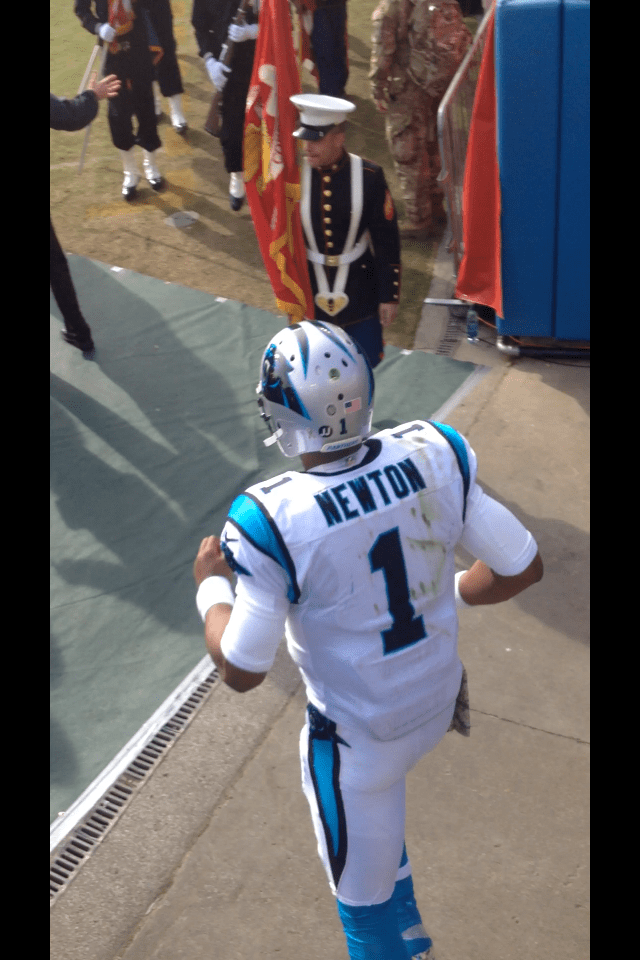
On a recent Friday evening in the real world, I watched in horror as people were executed in Paris. Their crimes were attending a concert and visiting a café. T.G.I.F. In an attempt to escape reality, I went to a pro football game on Sunday and watched adults in my section fight over Cam Newton’s game jersey and cleats. Some of these same people barely acknowledged the service men and women who presented our nation’s colors. We obligatorily clap for soldiers who defend our freedom, but we fight over the clothes of an NFL quarterback. We beg for the autograph of a guy holding a football, while we largely ignore the soldier holding our flag. The real world is jacked up.

IMG_0987

The following week in the elementary world proved much different than my real world weekend. I visited classrooms to observe teachers and ended up observing student laughter. While I was supposed to be evaluating teaching, I was treated to the enjoyment of learning. Over the course of that week, I learned with kindergarteners that rimes sometimes rhyme. Along with second graders, I learned that formal and informal language are distinctly different, homeboy. And I learned with fifth graders that playing musical chairs during library time is a wonderful way to learn the process for choosing a “just right” book. In fact, the closest I got to witnessing any act of violence that week was in a kindergarten classroom. Farmer Mack Nugget was plotting poultry genocide as Thanksgiving approached. Unfortunately for him, a busload of children showed up for a field trip and rescued eight doomed turkeys. Imagine that—children making someone’s (or something’s) world a better place. ’Twas the Night Before Thanksgiving captures, in its own fictionally funny way, what happens when the elementary world collides with the real world.

Those of us fortunate enough to work in the elementary world could offer a similar testimony. Escaping the real world with the help of children is not just an act of fiction; it’s a wonderful reality. Sometimes kids rescue turkeys; other times they rescue adults. MCE certainly isn’t perfect. What we are, however, is beautifully imperfect. The elementary world will always be a better place than the real world, and I am so thankful that my work is also my escape…at least when I am grounded enough to realize it. T.G.I.M.

COMMON CORE MEETS COMMON SENSE–Math (Part 3 of 3)

CC Math (CCM), the subject of this final post, may be the most hated educational reform since No Child Left Behind. The initiative remains a political hot potato and reminds me a little of the warnings I heard throughout most of my middle and high school years: “The metric system is coming! The metric system is coming!” Math teachers presumably enjoyed using the threat as motivation for students who couldn’t figure out which way to move those sneaky decimals. I think my former middle school teachers, Mrs. Gordon and Mr. Franklin, actually believed the hype. Unfortunately, they were 1.83 meters deep before America finally rendered a verdict and chose to stick with standard measurement. My own mother believed the metric system was a very real part of the Cold War. She also strongly discouraged me from using the algebraic expression of the numeral 7. “That looks like something the Russians would do,” she said. Thankfully, Rocky knocked out Drago and Reagan demanded that Gorbachev “tear down this wall.” Without Rocky and Reagan, we might all be measuring things in units of tens and writing those pinko commie 7s. On the bright side, running a 5K still sounds cooler than it otherwise would if the good old U. S. of A. had taken the metric plunge. Joking aside, we have survived math crises before. I suspect we will survive this one known as CCM. Navigating the rhetoric is the real challenge.

“CC is coming! CC is coming!” has been the battle cry since 2008, although it was much more of a battle whisper back then. The volume has gotten considerably louder recently. The difference between this math “crisis” and the one back in the ’80s is that the metric system remains other countries’ problem—or blessing, depending on your understanding. In contrast, CCM has actually become our problem—or blessing, depending on your position. Without even checking the Old North Church tower, I can tell you that the CC “threat” did not arrive by land; it arrived by C-note, as in the almighty dollar. When the Federal Government awarded Tennessee with half-a-billion dollars ($501 million to be exact) in Race to the Top grant money back in 2010, the understanding was very clear…CC isn’t going anywhere soon. For better or worse, CCM has now become reality in Tennessee, Sumner County, and yes, even Madison Creek.

This final installment documents my evolving thought process regarding CCM. Specific math standards are available here and are sortable by your child’s grade level. The words that follow come with the same disclaimer I offered two weeks ago: My intent is to spark original thought and consideration. To repeat what I said in Part One, I’m not here to sell you a bill of goods, and I’m not willing to sacrifice my professional credibility on the altar of political correctness, either. The Sumner County adopted math curriculum, Bridges Math, will be mentioned as well, simply because I consider it CCM in action and because the program provides families with concrete exposure to CCM. The jury, as far as I am concerned, is still out on both CCM and Bridges. Truthfully, I don’t expect the jury to return with a verdict for quite some time. Know on the front end, however, that I am cautiously optimistic about both CCM (think standards) and Bridges (think curriculum). I hope stakeholders are, too. Neither could be worse than the watered-down math standards and/or the curriculum that preceded them.

My first exposure to CCM occurred at a Tennessee Department of Education training several years ago. I was honestly appalled (seriously, I was appalled) that somebody managed to turn something as simple as 46 x 29 into an exercise in drawing and shading. When we were asked to solve the problem, I simply used the standard algorithm Mrs. Tate taught me back at Lakeview Elementary. I stacked the numbers on top of one another, started multiplying using the “times tables” I had already DOMINATED the year before, dropped a zero, multiplied some more, and arrived at the product with a little simple addition. I was, after all, the undefeated times tables champion in my class…an original mathlete. Billy Langford might disagree, but I would have won the entire grade level had the teachers allowed us to draw brackets and settle matters like men. I digress.

Imagine my surprise when the CC trainer requested that I solve 42 x 29 by drawing some boxes, doing a little shading, and arriving at the correct answer visually. I refused. Imagine her surprise when a grown man, not to mention an educator, simply told her no. I am my mother’s child, after all. Just like Mildred Duncan took her stand against the Big Red 7 back in the ‘80s, I dug in and Just Said No (Nancy reference, not Ronald) to Communist Core Math. People don’t get kicked out of education training, but I’m pretty sure I was close that day. As the trainer walked away frustrated, I mumbled something about being escorted out of better places by nicer people. Not my proudest moment. Apparently nobody had told this lady about my success as an elementary memorization all-star, but I had conveniently forgotten my plight as a high-school math reasoning failure. In hindsight, I wonder why I didn’t stop to consider the fact that I was literally incapable of solving her math problem visually because I was nothing more than a very successful math memorizer as a child. As a teenager, when math demanded reasoning, my grades suffered. Worse, my learning suffered. I lost the cognitive dissonance battle in CCM training that day, and pride persuaded me to file CCM under the “stupid column” instead of filing my math skills there. Have you ever experienced an “I-don’t-understand-this-so-it-must-be-stupid” moment?

Maybe you remember crushing math in school. Maybe you remember being crushed by math. Or maybe you remember both, like me. At the risk of oversimplifying a very complex topic, I think there are three types of math students: those who naturally excel, those who naturally struggle, and those who could go either way, depending on expectations and instruction. Let’s call these kids math studs, duds, and prospects. (Disclaimer…NO student is actually a dud in my book. The labels are offered for illustration purposes only.) Traditional math standards and curricula have failed the duds and the prospects for a long, long time. The reason I am cautiously optimistic about CCM in general, and Bridges in particular, is because it emphasizes reasoning at an early age, the very skill that creates problems for prospects and duds when they encounter advanced math theory. Think of it this way…traditional math instruction has historically failed approximately two-thirds of our math students (duds and prospects). Even worse, prospects like me were fooled into believing we were studs until memorization skills were no longer sufficient. Let me pose a couple of very serious questions:  Is it possible that CCM could turn prospects into math studs? Is it possible that even math duds can experience some level of success with the help of visualization skills promoted by CCM and taught through Bridges as early as kindergarten? I don’t know the answer to those questions…yet. What I do know is that doing the same thing we have always done will get prospects and duds the same rotten math results we have always gotten. The small percentage of students who are math studs have a seemingly innate ability to “get” numbers. You may know them as actuaries, engineers, statisticians, or even bookies. I contend these math minds will understand and excel at quantitative reasoning regardless of the standards or the curriculum. CCM, in other words, poses no risk to these real mathletes. Let’s simplify. Traditional math standards and conventional math instruction have historically enabled only math studs to succeed. CCM and Bridges now conceivably provide an opportunity for the other groups, duds and prospects, to succeed mathematically.

Is all this really that big of a problem? Are math skill deficits as pronounced as I am implying? I suppose the answer is a matter of perspective. Indulge me for a moment as I set aside my principal role for the purposes of speaking from a father’s perspective. For the Duncan family, math is currently a monumental problem with very real financial implications. My oldest, Eli, is in the process of making college decisions and applying for scholarships. He has one big problem. The gap between his ACT Math score (25) and his ACT Reading score (35) is TEN points. Consequently, the gap between his ACT Math score (25) and his ACT Composite score (31) is SIX points. This same Math subscore, because of its effect on the Composite Score, will likely cost him tens of thousands of dollars in merit scholarship money. In my world as principal, I quantify and attack achievement gaps between ethnic minorities and non-minorities, between the economically disadvantaged and the affluent, and between students with and those without learning disabilities. In my world as father, I wish I could attack the much more tangible achievement gap between my son’s ACT Math subscore and his other subscores. I can’t. Eli is not a math stud. He is a math prospect. On April 11, 2015, this kid showed up to take his ACT–a nationally-normed, standardized assessment–with Tennessee math skills. As my father would say, Eli showed up to a gun fight with a knife. My son arrived at a big league game with bush league math skills.

Still cynical? The following scores are real and represent how a math prospect named Eli was conditioned to believe his Tennessee math skills were sufficient. TCAP Math scores: 3rd Grade (514/Advanced), 4th (556/Advanced), 5th (563/Advanced), 6th (782/Proficient), 7th (808/Advanced). Even his high-school math scores were respectable, as measured by Tennessee End-of-Course (EOC) tests: Algebra I EOC (97%), Geometry EOC (96%), and Algebra II (94%). Remember his ACT Math score of 25? That score puts him in only the 79th percentile of math students in the United States. If you think states should be responsible for drafting and implementing their own educational standards, we agree. If you think home-grown Tennessee math standards were adequate, we disagree. Numbers don’t lie. Why am I optimistic about CCM and Bridges? Because it would be virtually impossible for an objective person to conclude that we should have stuck with our old standards and curriculum. Is CCM perfect? Absolutely not. Is it better than what we had? You better believe it. Would it have made a difference for Eli? We will unfortunately never know.

After more than 4,500 words and three different blog posts, allow me to close with some practical application. Parents, I’m talking directly to you. I’m also talking to myself as a father. What follows is a little advice, specifically within the context of Common Core. Like most advice, it applies in a much broader context, as well. One of the greatest disservices we can do our children is to jade them through our words and opinions. I have made the mistake more times than I care to admit. When we badmouth standards and curriculum (not to mention teachers, assignments, and schools), we provide our kids a license to disengage. Quite literally, we give them the permission they need to become apathetic at best and defeated at worst. Student statements during a math lesson are quite often reflective of parental attitudes: (1) “My mom said she was terrible at math, too.” (2) “Dad tried to help me with this math last night, but he just got frustrated.” (3) “Uncle Johnny is an accountant, and he can’t even do this Common Core stuff.” (4) “My parents think Bridges is completely ridiculous.” The list goes on and on. My own kids have heard me say things like, “The only numbers that matter have dollar signs and percentages attached.” Of course, I arrived at that wrong opinion because I am completely proficient at “banking and finance” math. Legitimizing advanced math, however, would require me to acknowledge my mathematical weaknesses. How I wish I could take those words back. Maybe I am responsible for that ACT Math subscore of 25.

Common Core is neither state-sponsored propaganda, nor is it the perfect cure for America’s educational ills. CC is, quite simply, an educational initiative designed to make American students more college and career ready. Period. Because of Tennessee’s historically diluted educational standards and miserable performance on nationally and internationally-normed tests, I am certainly willing to give this new initiative a test drive. Are you? More resources have been provided throughout this series than most parents likely have the time to consider. Nonetheless, even if you haven’t clicked on any other hyperlinks in these three posts, please consider clicking on these last two. Parents’ attitudes toward school work are contagious. So is a parent’s math anxiety. These attitudes and anxieties are most prevalently manifested through CCM. In this fascinating New York Times blogthe author explains exactly how contagious math anxiety can be, even for well-intentioned parents. It’s a quick but convicting read and well worth your time. Finally, if you need a simple and expedient look at exactly how CCM compares with traditional math standards and operations, Why Math Looks Different Now is the best video example I have found and only requires about eight minutes of your time.

I sincerely hope all of these resources have helped. Most importantly, thank you, parents, for playing an active and absolutely critical role in your children’s schooling. Educational efforts are most effective when schools and parents collaborate. MCE is blessed to call you partner, and we look forward to continuing our mutually beneficial relationship for the sake of our students and your children.

COMMON CORE MEETS COMMON SENSE–Reading/Language Arts (Part 2 of 3)

Having hopefully established the case for education reform in last week’s post, a closer look at CC Reading/Language Arts (RLA) standards is in order.  For clarification purposes, these same standards are sometimes referred to as English/Language Arts (ELA), depending on the source of the information.  We will use RLA and ELA interchangeably, as well.  Regardless of what we call them, they definitely aren’t your father’s elementary school standards.  Click here and simply scroll down to “K-8 Standards” for an in-depth look at these rigorous expectations.  By selecting your child’s grade level from the drop down menu, you can readily access everything he or she is expected to know by the end of this school year.  Specific standards are broken down into six categories (Literature, Informational Text, Foundational Skills, Writing, Speaking/Listening, and Language).  NOTE:  The actual standards are listed in tables with blue headiings.

If you’re scoring at home and assuming you read last week’s post, the word rigorous has already been used three times.  The idea of educational rigor means different things to different people.  In the interest of developing a common, working understanding, allow me the liberty to define rigorous as difficult.  Interestingly, www.thesaurus.com lists brutal and burdensome as being synonymous with rigorous.  As a principal, I am comfortable defining rigorous as difficult, brutal, or burdensome.  I am even willing to accept rigorous as meticulous, another synonym.  Candidly, however, I sometimes wonder if we are labeling impossible expectations as “rigorous standards.”  In other words, if a wonderfully rigorous standard is introduced at the wrong grade level, what we really have is an impossible expectation.

To illustrate this concern as it applies to the rigorous vs. impossible debate, let’s play a quick game.  I’ll provide a random CC ELA standard below, and you guess the grade level at which a student is required to master the expectation.  Ready?

“Students will write narratives in which they recount two or more appropriately sequenced events, including some details regarding what happened, use temporal words to signal event order, and provide some sense of closure.”

What grade level did you guess?  Third?  Fourth?  Wrong.  The “rigorous” Writing Standard above was taken directly from Tennessee’s ELA Standards for FIRST GRADE.  I am blessed to interact with 100 first graders every day.  They are many things, including cute, funny, and willing to hug most anybody.  They chew with their mouths open, run when nobody is watching, and smell much better before recess than after.  Some can read fluently, and some are working hard to be able to do so.  Generally speaking, however, most first graders are not capable of “signaling event order with temporal words” or “providing a sense of closure to their writing.”  The RLA standard in bold above would be considered appropriately rigorous for a third or fourth grader, in my opinion.  For first graders, the same standard is bordering on impossible.  In most cases, six-year-olds’ idea of providing narrative closure is to draw a heart or a car at the end of their stories.  Advanced first graders might attempt to provide a sense of closure with “The End.”

Perhaps I am selling six-year-olds short.  They are definitely like little sponges, soaking up virtually everything put in front of them academically.  Maybe after a year of CC ELA standards at the kindergarten level, these little people will be quite capable of the ominous standard referenced.  What concerns me, though, is educators’ propensity to turn children into what Uncle Buck fought against way back in 1989.  Who could forget this hilarious movie clip?  CAUTION:  Apologies for the bad word at the 2:22 mark.  To avoid it, simply mute the clip between 2:20 and 2:24.  To paraphrase Uncle Buck, I’m not sure I want to know a six-year-old who is good at signaling event order with temporal words.

Setting aside this objection to developmentally inappropriate standards–really, the only one I have–there are many, many things I appreciate about CC RLA.  These new standards call for a 50/50 balance of complex fiction and content-rich non-fiction.  In other words, CC requires that students enjoy exposure to both quality literature and detailed informational texts.  That seems like a reasonable idea to me as a learner, as a principal, and as a father.  Wouldn’t it be nice if we could choose to live and learn exclusively in the make believe world of our favorite fictional genre?  Too bad that’s completely impractical.  Non-fiction is a necessary part of adulthood, so I believe it should be a necessary part of childhood, too.  Besides, some students (stereotypically boys) hate reading until they stumble across a book about snakes, snails, or puppy dog tails.  Consider a couple of examples.

When my wife and I began dating, her 13-year-old brother was in middle school.  His teachers wanted him to read The Outsiders and Chronicles or Narnia, but he was too busy devouring JEGSMotor Trend, and National Dragster magazines.  He is now happily married with two children and getting along quite nicely building race cars for a living.  With apologies to Hinton and Lewis–not to mention Ponyboy and Mr. Tumnus–if my brother-in-law had it to do over, I suspect he would choose the same informational texts.  Classical literature undoubtedly has value, but for too long we have prioritized it well above non-fiction.  I’m relieved that CC makes room for both.  This paradigm shift is without question my favorite piece of CC.

My own son preferred the Encyclopedia of Dog Breeds over Junie B. Jones or Diary of a Wimpy Kid at a very early age.  Thanks to great teachers, he eventually found some Mike Lupica books (sports fiction), but that was well after he had practically memorized the dog book and worn the cover threadbare in the process.  Now a high school senior, this same young man has suffered through books labeled “classics” by people he has never met with different tastes than his own.  Simply put, he endures the fiction he is forced to read, but he devours the informational texts he chooses to read.  My freshman daughter, on the other hand, loves and prefers fiction.  Do I encourage her to read fiction that I would never consider for myself?  You better believe it.  When she asks if I will take her to buy a new novel on its release date, the answer is always yes.  Reading is reading in my book (pun intended).  My simple-minded reading philosophy is this:  Figure out what a kid enjoys, and give them literary access to everything you can find on the topic–magazines, books, and even supervised internet time.  Well-intentioned educators and parents make a mistake when they classify reading into two categories–“reading for fun” and “reading for information.”  For some kids, reading for information IS reading for fun.

Finally, writing and speaking skills have been expected, but not necessarily taught, in upper grades for a long, long time.  CC ELA now requires educators to formally teach students to write and speak as early as kindergarten, and those skills are continually refined in every grade as students’ cognition allows.  As a former high school teacher, I am incredibly grateful for this new focus on student expression.  The majority of the juniors and seniors I taught were terrible writers.  I remember thinking, “Why did nobody teach these students to write?”  When I asked high school English teachers and friends (who could more aptly–and lovingly–be called high school literature snobs) about this problem, they blamed middle school English teachers.  When I asked those middle school teachers (again, friends and literature snobs) what happened, they blamed inadequate elementary instruction.  I blame nobody.

How can we blame any teacher for not grooming great writers and public speakers?  For too long, traditional RLA standards have left a great deal to be desired when it comes to student expression.  In fact, for most of my 20-year career, RLA standards could have been much more accurately identified as simply R standards–reading.  Language arts, according to my English teacher friends (now maybe former friends because I called them literature snobs), was “taught” through writing.  “Research supports teaching language arts through writing,” they said.  “Well, it’s not working,” I replied.  Research also supported fen-phen, New Coke, and the Flat Earth Theory.  Turns out, those research findings were wrong, too.  Before CC, I felt like we should pause for a moment of silence to remember the hieroglyphics of diagramming sentences.  Let me step down off of my soapbox in order to conclude.

Considering the totality of CC RLA standards, I would consider myself a proponent.  For the record, I think all CC RLA standards are worthy of students’ time and teachers’ instruction.  My only objection is based on the age at which some standards are expected to be mastered.  Assuming we don’t call an impossible expectation a rigorous standard, I am happy with all six categories of CC RLA (Literature, Informational Text, Foundational Skills, Writing, Speaking/Listening, and Language).  As a pragmatic reader and “grammar nazi,” I am ultimately thankful that CC provides something for everyone, especially my former?? friends and literature snobs.  S.E. Hinton and C.S. Lewis might not be thrilled with CC ELA standards, but I believe Uncle Buck would approve.

COMMON CORE MEETS COMMON SENSE–The Need for Education Reform (Part 1 of 3)

Educators, like most adults I know, are tempted to form opinions based on political rhetoric and/or media reports, the line between which has been blurred in recent decades.  Our opinions regarding Common Core State Standards are no different.  Most of us are at least honest enough to admit that our CC beliefs have been shaped by the comments of others.  That’s a healthy approach to forming an opinion about most anything, provided we are willing to hear both sides of an argument.  Where we get into trouble is when our beliefs are determined by the comments of others.  Put more practically and directly, are your CC opinions based exclusively on what you hear on your favorite “news” channel or what you read on your favorite website?  That’s dangerous.  That’s called motivated reasoning or confirmation bias, and it enables people to ignore facts that run counter to their preconceived notions–notions that may be nothing more than opinions they adopted (or stole) from another person or institution.

Let me just come right out and ask some very difficult questions:  Do you dislike CC because of what you heard on Fox News?  Are you a CC supporter because CNN persuaded you to be one?  Are you convinced that CC is actually “Communist Core” because you stumbled across a Drudge Report article linking this new “state-sponsored curriculum” to Bill Ayers by way of Barack Obama?  Last one, I promise….  Would you consider CC the salvation of American education because MSNBC broadcast a special report which concluded the same?  Let me challenge you.  Bill O’Reilly, Anderson Cooper, Matt Drudge, and Rachel Maddow all have agendas, and they all pander to audiences of like-minded people.  And I love that.  Their ulterior motives actually help me arrive at my own conclusions regarding many topics, especially CC.  As an educator, I also have the luxury of refining my CC beliefs through the filter of experience.  Research and practical application are a wonderful combination.

I am regularly asked about my opinions regarding Common Core.  The following words are neither an endorsement for, nor a condemnation of, CC in general.  My motive is simply to share with stakeholders what I honestly believe about CC–beliefs galvanized through research and experience–and to provide some resources, when appropriate.  Readers are encouraged to draw their own conclusions.  If you are in search of evidence that supports what you have already concluded, however, you are likely to be disappointed.  Advantages and disadvantages will both be discussed.  Part one of this three-part undertaking begins simply enough by considering the need for education reform.  Next week, part two examines Reading/Language Arts (RLA) through the lens of CC.  Part three, scheduled to be posted in two weeks, is an open invitation for you to witness my personal wrestling match with CC Math standards and our Bridges Math curriculum.  Let’s first establish the need for education reform.

Do we really need Common Core?  I believe that’s the wrong question to ask.  Here are two better questions:  1) Do we really need education reform in America?  2) Do we really need education reform in Tennessee?  Who among us would say we don’t? Depending on which study you read–and there are seemingly thousands–U. S. students lag well behind other industrialized nations in math, science, and reading.  Interestingly, some of those same studies rank American students first in one category–self-esteem.  I blame participation trophies, but that’s another blog for another day.  So, how about our state?  Sadly, in an educationally underperforming nation, Tennessee is underperforming educationally as a state.  Several national studies rank Tennessee in the bottom ten states in virtually every academic category, including reading, math, and science.  Ouch.  I want better for my kids.  I want better for your kids.

Clearly, our education system is broken.  Enter Common Core State Standards.  Is CC perfect?  Nope.  Is it better than the diluted standards Tennessee rode to the bottom of the United States’ educational rankings?  Ab-so-lute-ly.  CC is ridiculously rigorous.  Given the fact that we have an education problem in America and in Tennessee, and given the fact that CC is available, I am certainly willing to approach these new, rigorous standards with an open mind.  Doing so requires me to evaluate both parts of Common Core–RLA and Math.  Stakeholders are encouraged to do the same.  To learn more about what CC looks like in Tennessee, please click here and consider bookmarking the page for future reference.  If a national perspective is preferred, additional information is available here.  For conspiracy theorists like me who are naturally inclined to suspect propaganda, grab a cup of coffee and research Common Core Problems (I’ve already typed in the search criteria, so just click on the hyperlink above).

Presenting both sides of the CC debate may not be the politically correct thing for a principal to do, but I’m not willing to sacrifice my professional credibility on the altar of political correctness.  I’m not here to sell you a bill of goods.  Take some time, and learn as much as you can…from both sides of the debate.  Set aside all preconceived notions and embrace your cognitive dissonance.  It’s healthy.  You have a week to complete your research.  Homework isn’t just for kids….